Agents are doing the work: how AI changed from a chat to an employee
The biggest shift in AI this year isn't a smarter chatbot, it's agents that actually do tasks: write and test code, draft reports, reconcile records, answer customers. More than half of organisations now run agents across multi-step workflows, and roughly 80% report measurable returns. When AI stops advising and starts working, the conversation for a business changes.
From chat to work
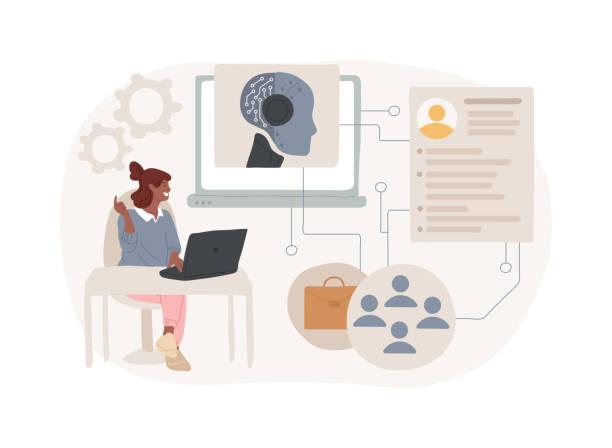
2026 is the year AI stopped answering questions and started doing work. The shift we've been covering for a year has now gone mainstream: instead of asking a chatbot for a draft, businesses are handing it an entire task, resolve this ticket, file this report, qualify this lead, and letting it run.
The numbers coming out of this year's enterprise surveys are startling. Anthropic's survey of more than 500 technical leaders found that 57% of organisations now deploy AI agents in multi-stage workflows, and 16% already run agents that span multiple functions. Around 80% report a measurable return on investment, and 90% of those surveyed use AI in their software build process. Outside coding, the most common agent roles are data analysis (60%) and internal process automation (48%).
Perhaps the cleanest signal: on Anthropic's API, 77% of business traffic is now from automated workflows handing full tasks to models, not from humans prompting in a chat window.
Where agents actually help
The companies getting value out of agents are the ones deploying them on narrow, bounded jobs where a clear definition of 'done' exists. The list keeps converging across the orgs we've looked at:
- Customer service, agents resolve tickets end-to-end and only hand over a well-summarised problem to a human
- Data analysis and reporting, pulling numbers across systems and writing the summary someone used to spend a day on
- Internal process automation, onboarding, approvals, reconciliation and follow-up that used to get dropped between inboxes
- Software and tooling, generating, reviewing and fixing code under human review
- Planning and forecasting, supply chain, inventory and finance scenarios run continuously instead of quarterly
The catch, integration and data
Agents are only as good as what they can read and act on. The same survey makes this brutally clear: 46% of respondents cite integration with existing systems as the biggest blocker, and 42% say data quality is the barrier. An agent connected to one spreadsheet is a toy; an agent connected to your inventory, ledger and CRM is an engine.
In other words, what decides success is less about the model and more about the plumbing around it. The organisations succeeding at this stage are not the ones with the fanciest prompts, they're the ones who cleaned up their data and gave agents read and write access to the systems where the work actually happens.
What this means for the next business
You don't need to be a software company to benefit, but you do need to be deliberate. The pattern that keeps working:
- Start with a task, not a vague 'use AI'. Pick something bounded that recurs weekly and touches data you already have
- Sort the data first, an agent is only as smart as the numbers and records you feed it
- Decide how agents escalate. When the job runs off the rails, a human should be one click away, not one API key deep
- Measure it. If a workflow took a day and now takes an hour, that's the ROI, write it down
The bottom line
Agents are no longer a demo. They're a real way to shrink the gap between a business's systems and its to-do list. The ones that win are the ones that treat agent rollout like any other serious operations project, bounded, measured and wired into the right data.
Put this to work in your business
The posts here come from what we see building and running systems every day. If any of it maps to your business, we can help make it operational, AI projects, web platforms, data and security included.